
 Home
Home- August 20, 2025 / 01:39 PM ISTByNaveen


Spartacus
- Drama
- Historical
- Steven S. DeKnight, Sam Raimi (Director)
- Robert Tapert (producer)
- Joshua Donen (producer)
- Chloe Smith (producer)
- Charles Knight (producer)
- Aaron Lam (producer)
Watch Trailer
►English
NAStory:
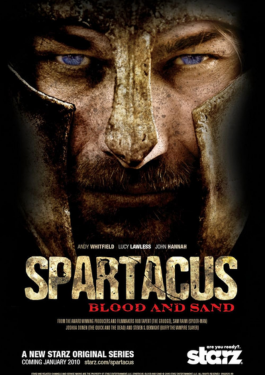
The American historical drama television series Spartacus, which was shot in New Zealand, debuted on Starz on January 22, 2010, and ran until April 12, 2013. A Thracian gladiator who led a significant slave revolt against the Roman Republic from Capua between 73 and 71 BC, Spartacus served as the inspiration for the television series. The goal of executive producers Robert Tapert and Steven S. DeKnight was to organize the events of Spartacus’ little-known early existence before history began.
Starz created a six-episode prequel miniseries called Spartacus: Gods of the Arena after production on a second season of Spartacus: Blood and Sand was postponed due to Andy Whitfield’s diagnosis of early-stage non-Hodgkin lymphoma. In the second season of Spartacus: Vengeance, Starz cast actor Liam McIntyre as Spartacus after the actor’s cancer returned and he passed away on September 11, 2011. Spartacus: War of the Damned, the third and final season, was revealed by Starz on June 4, 2012. DeKnight is returning to write for the Spartacus: House of Ashur sequel series, which is currently in development at Starz.
The narrative starts with an unidentified Thracian serving in a Roman auxiliary unit led by the legatus Claudius Glaber in a campaign against the Getae on the Lower Danube. The proconsul of the Roman province of Macedonia, Marcus Terentius Varro Lucullus, led a march against the Getae in 72–71 BC. The Getae were allies of Mithridates VI of Pontus, Rome’s opponent. Glaber convinces the Thracians to join the Romans as auxiliary troops because the Getae regularly raid their territory.
After being convinced to pursue greater glory by his wife Ilithyia, Glaber chooses to abandon his attack on the Getae and instead face the Mithridates’ armies head-on in Asia Minor. After leading a rebellion against Glaber because he feels deceived, the Thracian returns to find his town decimated. The following day, Glaber captures the Thracian and his wife Sura; Sura is taken away and condemned to slavery, while the Thracian is condemned to die in the gladiatorial arena for his crime. The Thracian is sent to the gladiator training base in Capua, Italy. He defeats the four gladiators sent to execute him in the arena against all odds, and the crowd instantly takes notice. Senator Albinius converts the death penalty into slavery.
Quintus Lentulus Batiatus, the owner of a ludus in Capua, advises naming the prisoner “Spartacus” since he battled like the fierce Thracian ruler of that name, even though his true name is unknown. Batiatus buys the Thracian for training inside his ludus under the guidance of Oenomaus, a former gladiator and fellow slave who is referred to by the gladiators as “Doctore,” which means instructor, after noticing the Thracian’s fierce raw skill and widespread popularity. Varro, a Roman who sold himself into slavery to settle his obligations and provide for his family, befriends him. More experienced gladiators, particularly Barca, a Carthaginian, and Crixus, an unbeaten Gaul, bother him. Sura was sold to a Syrian slave broker, as Spartacus soon finds out.
In exchange for the potential neophyte’s cooperation in the arena, Batiatus, who has struggled to control Spartacus during his early training days, vows to locate Sura and bring them back together. Spartacus kills Theokoles, The Shadow of Death, following numerous near-fatal experiences and hours of additional training. His titles as “Champion of Capua” and “The Bringer of Rain” elevate him to the status of a living legend. Sura is purchased by Batiatus, but she is delivered fatally wounded after allegedly being ambushed by bandits on the way. Batiatus covertly had her killed in order to maintain Spartacus’ loyalty and concentration.
Spartacus abandons his Thracian ancestry and gives up on his aspirations for freedom, contenting himself with his existence as a champion. Ashur, a slave and former gladiator, assisted Batiatus in killing Barca, who wanted to purchase his release. Lucretia, Batiatus’s wife, is having an affair with Crixus. She subsequently becomes pregnant (the father is unknown), but she and Batiatus have been unable to procreate.
The pivotal moment occurs when Spartacus is scheduled to engage in an exhibition match with Varro, his only ludus companion, to commemorate the emergence of Numerius, the son of the Capuan judge, as a man. Ilithyia, who has detested Spartacus since he humiliated her husband Glaber with his rebellion, entices the young man to demand that the match’s loser be put to death. When the young man gives the “thumbs down,” Batiatus, hoping to gain favor with the boy’s influential father, coerces Spartacus into complying and killing Varro. As anticipated, Spartacus prevails.
As he struggles with his injury from this battle as well as his guilt and grief about having to murder his comrade, Spartacus has fever nightmares that make him believe Batiatus orchestrated Sura’s demise. By making Aulus, Batiatus’ man, confess to the crime before he is killed, he is able to verify this. He decides to “kill them all” and organize an uprising against the ruling house he once fought for since he knows that it is all or nothing in terms of fighting his servitude.
To exact his retribution, Spartacus recruits Crixus and the other gladiators to help him finally vanquish the Batiatus family. At the Ludus, the Capuan aristocracy is set up for a death-defying duel between Crixus and Spartacus. Batiatus is confronted by Doctore, whom he calls by his given name, Oenomaus, regarding Barca’s demise and Ashur’s role in it. Mira, Batiatus’ wife’s new slave, assists Spartacus by being assigned to unlock the villa’s gate from the training area.
After learning that he was weakened to ensure Spartacus’ victory, Crixus reluctantly joins Spartacus in the hopes of reuniting with his lover, Naevia, who had been exiled from the Ludus by Lucretia after she learned of her affair with Crixus due to Ashur’s plot to exact revenge on Crixus. At first, Doctore prevents Batiatus from being killed by Spartacus. While Illithyia flees and has her guards close the door to the ludus from the outside, Crixus convinces Doctore to accompany him with Spartacus in the subsequent pandemonium of the gladiators murdering the guards and a few guests.
Following through on his promise, Doctore attempts to murder Ashur, but his target escapes. Crixus fatally injures Lucretia by stabbing her abdomen with a sword, piercing her womb and killing their unborn child. After telling Numerius that Varro was her husband, Aurelia, Varro’s wife, murders him, and Spartacus ultimately murders Batiatus in front of Lucretia, who is gravely injured. Spartacus promises to make “Rome tremble” following the massacre.
More Details
| Director | Steven S. DeKnight, Sam Raimi |
|---|---|
| Story | Steven S. DeKnight, Sam Raimi |
| Screenplay | Steven S. DeKnight, Sam Raimi |
| Dialogues | Steven S. DeKnight, Sam Raimi |
| Cinematography | Aaron Morton |
| Editor | Gary Hunt, Jonathan Woodford-Robinson |
| Music | Joseph LoDuca |
| Producer | Robert Tapert, Joshua Donen, Chloe Smith, Charles Knight, Aaron Lam |
| Cast | |
| Release Type | OTT |
| Language | English |
| Production | DeKnight Productions, Starz Originals |
| OTT Platform | NA |
Upcoming Celebs Birthdays

Rahul Ravindran

Harsh Purwar

Raj Babbar

Hamsalekha

Gnanasagar Dwaraka

Siva Ananth

Tina Shilparaj

Neeraj Shridhar

Neha Rajpal

Sugeeth
Upcoming Movies

Bhagavanthudu

Rao Bahadur

Gatta Kusthi 2

Baby Do Die Do

Nagabandham

Alpha

Makutam

Oh Sukumari

Srinivasa Mangapuram