
 Home
Home- October 29, 2025 / 10:40 PM ISTByFilmy Focus Writer


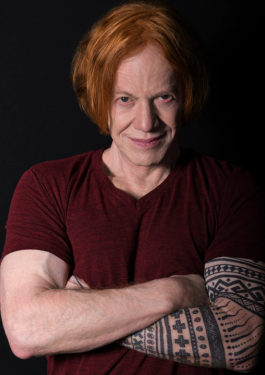
Danny Elfman
Biography:
Danny Elfman was born on May 29, 1953, in Los Angeles, California, to a Jewish family of Russian origin. His mother, Blossom Elfman (née Bernstein), worked as a writer and teacher, while his father, Milton Elfman, was also a teacher. He grew up alongside his brother, Richard Elfman, who would later become an actor, musician, and journalist. Raised in the diverse and prosperous community of Baldwin Hills, Elfman spent much of his childhood at the neighborhood movie theater, where he developed a fascination with classic science fiction, fantasy, and horror films. It was during these early years that he became aware of the work of film composers such as Bernard Herrmann and Franz Waxman. Elfman later admitted that, out of boredom, he occasionally fabricated stories about his background, including a false claim that he was born in Amarillo, Texas, and that his parents served in the United States Air Force.
During his early education, Elfman displayed a natural aptitude for science but showed little to no interest in music. In fact, he was once rejected from his elementary school orchestra for lacking musical ability. However, this perception changed dramatically in the late 1960s when he transferred to a different high school and was introduced to a circle of musically inclined peers. Through them, he was exposed to early jazz and the works of composers like Igor Stravinsky and other twentieth-century musicians. Elfman attended University High School in Los Angeles but eventually left before completing his studies.
After leaving school, Elfman followed his brother Richard to France, where he joined Jérôme Savary’s avant-garde musical theater group, Le Grand Magic Circus, performing as a violinist. Following this, he embarked on a ten-month independent journey across Africa, performing as a street musician and collecting various West African percussion instruments. His travels came to an end when a series of illnesses forced him to return to Los Angeles. Around this time, Richard was in the process of forming a new musical theater ensemble.
Upon his return in the early 1970s, Elfman was invited by his brother to become the musical director of the performance art troupe The Mystic Knights of the Oingo Boingo. In this role, he arranged and adapted music from the 1920s and 1930s, drawing on the works of artists such as Cab Calloway, Duke Ellington, Django Reinhardt, and Josephine Baker. The ensemble, which featured up to fifteen performers playing more than thirty instruments, also performed original compositions by Elfman. He designed and built several unique instruments for the group, including an aluminum gamelan, the “Schlitz celeste” made from tuned beer cans, and a “junkyard orchestra” constructed from automobile parts and trash cans.
The Mystic Knights of the Oingo Boingo performed both on the streets and in theaters, eventually expanding to nightclubs across Los Angeles. Richard departed in 1976 to pursue filmmaking, and as a farewell to the troupe’s original concept, he produced the film Forbidden Zone, inspired by the group’s stage performances. Danny Elfman composed the songs and his first film score for the project, while also appearing as the character Satan, performing a reimagined version of Cab Calloway’s “Minnie the Moocher.”
Before Forbidden Zone was released, Elfman assumed leadership of The Mystic Knights in 1976, taking on the roles of lead vocalist and principal songwriter. In 1979, he reduced the group to an eight-member band that adopted a ska-influenced new wave style. That same year, the group was renamed Oingo Boingo. Among their eight studio albums, all written by Elfman, their 1985 release Dead Man’s Party became their most successful, featuring the hit track “Weird Science,” which was also used in the film of the same name. The band appeared performing “Dead Man’s Party” in the 1986 film Back to School, for which Elfman composed the score. In the late 1980s, he shifted Oingo Boingo’s sound toward a more guitar-driven rock style, which persisted until their final album, Boingo, released in 1994.
Due to permanent hearing damage sustained from live performances and scheduling conflicts with his film scoring career, Elfman decided to dissolve Oingo Boingo in 1995 after five sold-out farewell concerts at the Universal Amphitheatre, concluding on Halloween night. Exactly twenty years later, on October 31, 2015, Elfman reunited with Oingo Boingo guitarist Steve Bartek to perform “Dead Man’s Party” with an orchestra as part of a live-to-film presentation of The Nightmare Before Christmas at the Hollywood Bowl. He remarked that the event marked “twenty years to the day” since Oingo Boingo’s retirement.
More Details
| Name | Danny Elfman |
|---|---|
| Date of Birth | 29/05/1953 |
| Current Residence | Los Angeles, California, U.S. |
| Religion | Christian |
| Nationality | American |
| Height | 180 CM |
| Hobbies | Playing Musical Instruments, Singing Songs |
| Father | Milton Elfman |
| Mother | Blossom Elfman |
| Spouse | Geri Eisenmenger (divorced) Bridget Fonda (m. 2003) |
| Educational Qualification | Graduated |
| Debut Movies | |
|---|---|
| Language | Movie Name |
| English | Forbidden Zone |
| Awards List | ||||
|---|---|---|---|---|
| Year | Award | Category | Movie Name | |
Gallery of Danny Elfman
Upcoming Movies
Upcoming Celebs Birthdays
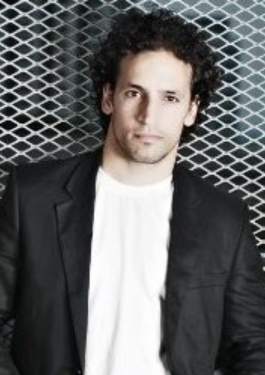
Steven Dasz
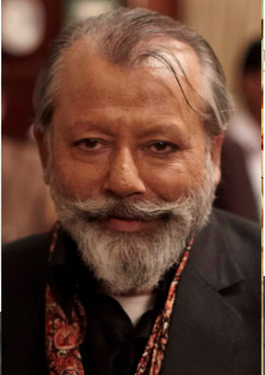
Pankaj Kapur
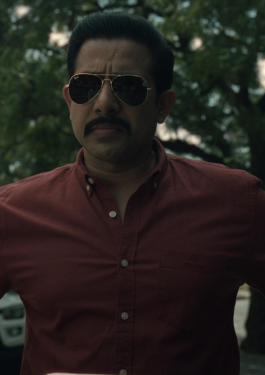
Randheer Rai

Gursimran Sandhu

Mrunmayee Deshpande
Danny Elfman

Preetika Rao
Anand Tiwari
George Joseph

Kottayam Nazeer
Upcoming Movies
The Great Grand Superhero
Mareechika
Peddi
Masters of the Universe
Sing Geetham
Governor: The Silent Saviour
Deewana

Maa Inti Bangaaram
Lenin